

UEFA EUROPEAN CHAMPIONSHIPS
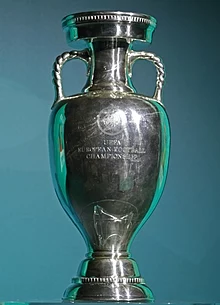
The UEFA European Football Championship—commonly referred to as the European Championship or simply the Euros—is the principal international association football tournament organised by the Union of European Football Associations (UEFA). It is contested by the senior men’s national teams of UEFA member associations and serves to determine the continental champion of Europe. The tournament is the second most-watched football competition worldwide, after the FIFA World Cup; the Euro 2016 final alone was viewed by an estimated global audience of approximately 600 million.
The competition has been held every four years since its inception in 1960, with the exception of Euro 2020, which was postponed until 2021 due to the global COVID‑19 pandemic. Traditionally staged in even‑numbered years between FIFA World Cup tournaments, the competition was originally known as the European Nations’ Cup, before adopting its current title in 1968.
Prior to the tournament finals, all teams—apart from the host nation or nations, which qualify automatically—must progress through a qualifying competition. Until 2016, the championship winners were invited to participate in the following year’s FIFA Confederations Cup, although participation was not mandatory. From the 2020 edition onwards, the European champions compete in the CONMEBOL‑UEFA Cup of Champions.
Below is a list of tournament winners:
| Country | Number of wins | Years won | |
 | Spain | 4 | 1964, 2008, 2012, 2024 |
 | Germany | 3 | 1972, 1980, 1996 |
 | Italy | 2 | 1968, 2020 |
 | France | 2 | 1984, 2000 |
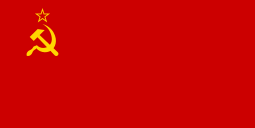 | Soviet Union | 1 | 1960 |
 | Czechoslovakia | 1 | 1976 |
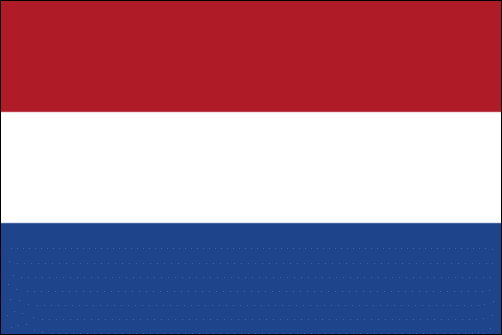 | Netherlands | 1 | 1988 |
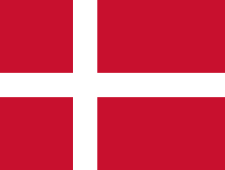 | Denmark | 1 | 1992 |
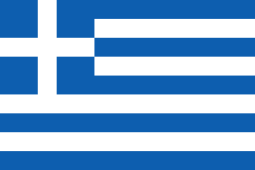 | Greece | 1 | 2004 |
 | Portugal | 1 | 2016 |
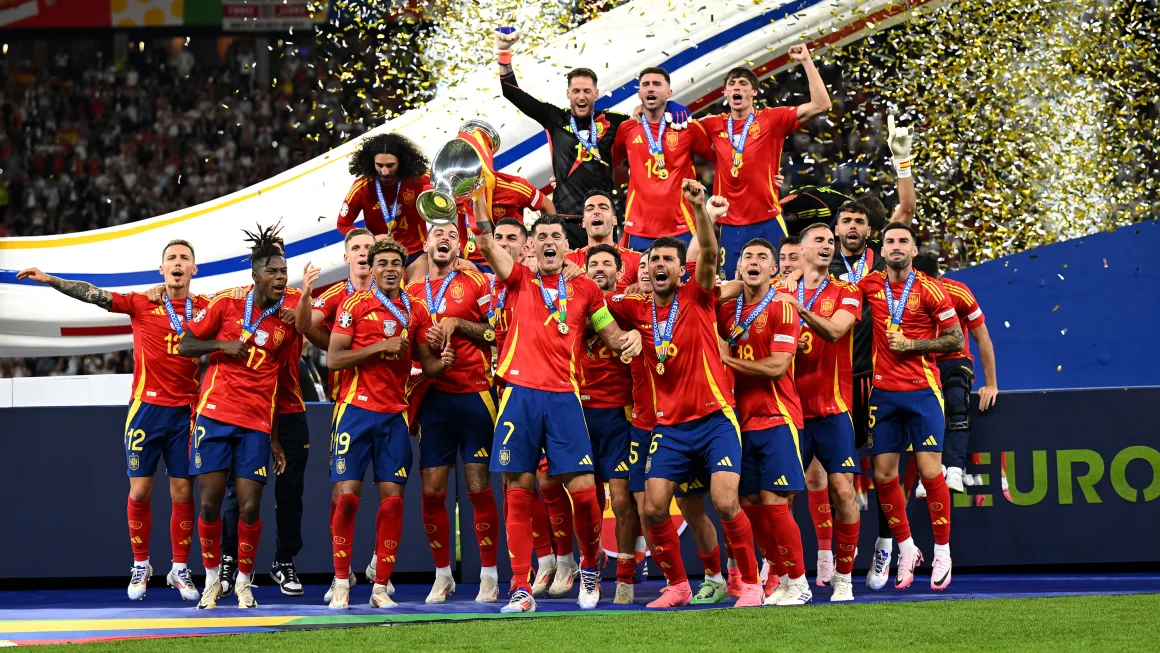
Current holders:
SPAIN
History: Beginnings
Regional tournaments for national teams existed well before the introduction of a truly pan‑European competition. Beginning in 1883, the British Home Championship was held annually and contested by the four national teams of the United Kingdom: England, Scotland, Wales, and Ireland (later Northern Ireland). Until these teams began participating in the FIFA World Cup in 1950, this competition represented the most significant international tournament for the Home Nations.
Similarly, the Central European International Cup was staged on six occasions between 1927 and 1960. This tournament brought together the national teams of Austria, Hungary, Italy, Czechoslovakia, Switzerland, and Yugoslavia, serving as an important regional competition in continental Europe.
The concept of a pan‑European football tournament was first proposed in 1927 by Henri Delaunay, then secretary‑general of the French Football Federation. However, it was not until 1958—three years after Delaunay’s death—that plans for the competition were formally implemented. In recognition of his vision, the trophy awarded to the champions bears his name.
The inaugural tournament, held in France in 1960, featured just four teams in the final stage, selected from 17 entrants. The Soviet Union claimed the first title, defeating Yugoslavia 2–1 in a tense final in Paris. The tournament was notable for Spain’s withdrawal from their quarter‑final tie against the Soviet Union due to political tensions. Among the 17 teams that entered the qualifying rounds, England, the Netherlands, West Germany, and Italy were prominent absentees.
Spain hosted the second edition in 1964, with participation in the qualifying competition increasing to 29 teams. West Germany again declined to enter, while Greece withdrew after being drawn against Albania, with whom they were still officially at war. In the final, the host nation defeated reigning champions the Soviet Union 2–1 at the Santiago Bernabéu Stadium in Madrid.
The tournament format remained unchanged for the 1968 finals, which were hosted and ultimately won by Italy. This edition was notable for the only occasion on which a match was decided by the toss of a coin—the semi‑final between Italy and the Soviet Union. The final required a replay after Italy and Yugoslavia drew 1–1; Italy went on to win the replay 2–0. A total of 31 teams entered the competition.
Belgium hosted the 1972 tournament, which was won by West Germany. The final saw West Germany defeat the Soviet Union 3–0 at the Heysel Stadium in Brussels, with two goals from Gerd Müller and one from Herbert Wimmer. The tournament offered an early glimpse of the German side that would go on to win the 1974 FIFA World Cup.
Euro 1976, held in Yugoslavia, was the final edition to feature only four teams in the tournament finals and also the last in which the host nation was required to qualify. The final between Czechoslovakia and West Germany was decided by the newly introduced penalty shoot‑out. After seven successful penalties, Uli Hoeneß missed for West Germany, leaving Antonín Panenka to secure victory for Czechoslovakia with an audacious chipped effort—described by UEFA as “perhaps the most famous spot kick of all time”. Czechoslovakia won the shoot‑out 5–3.
Expansion to Eight Teams
The competition expanded to eight teams for the 1980 tournament, once again hosted by Italy. The revised format introduced a group stage, with the winners of each group progressing directly to the final, while the runners‑up contested a third‑place play‑off. West Germany secured their second European title by defeating Belgium 2–1 at the Stadio Olimpico in Rome, with both goals scored by Horst Hrubesch.
France claimed their first major international title on home soil in 1984. Captained by Michel Platini, who scored an extraordinary nine goals in just five matches, France defeated Spain 2–0 in the final, with Platini opening the scoring. The tournament format was adjusted again, with the top two teams from each group advancing to the semi‑finals, rather than group winners proceeding straight to the final. The third‑place play‑off was also abolished.
Euro 1988 was hosted by West Germany, whose hopes of lifting the trophy ended with a 2–1 semi‑final defeat to the Netherlands, sparking jubilant celebrations among Dutch supporters. The Netherlands went on to win the final, defeating the Soviet Union 2–0 at Munich’s Olympic Stadium in a repeat of their opening group match. Marco van Basten scored the second goal with a spectacular volley from the right wing, widely regarded as one of the greatest goals in football history.
The 1992 tournament, held in Sweden, produced one of the most remarkable outcomes in European Championship history. Denmark, originally absent from the finals, were invited to participate after United Nations sanctions prevented Yugoslavia from competing amid the Yugoslav Wars. Denmark went on to defeat holders the Netherlands on penalties in the semi‑finals before overcoming reigning FIFA World Cup champions Germany 2–0 in the final. This tournament marked the first appearance of a unified Germany at a major international competition and was also the first to feature players’ names printed on the backs of shirts.
Expansion to 16 teams
England hosted Euro 1996, the first tournament to adopt the “Euro [year]” naming convention and the first to expand the finals to 16 teams. The hosts, in a repeat of the 1990 FIFA World Cup semi‑final, were eliminated by Germany on penalties.
The surprise team of the tournament was the newly formed Czech Republic, competing in its first international competition following the dissolution of Czechoslovakia. They reached the final after defeating Portugal and France in the knockout stages. Germany went on to win the final 2–1, thanks to the first golden goal in a major international tournament, scored by Oliver Bierhoff five minutes into extra time. This victory marked Germany’s first European Championship title as a unified nation.
Euro 2000 was the first tournament to be co‑hosted by two countries, with matches played in the Netherlands and Belgium. France, the reigning World Cup holders, entered the competition as favourites and justified that status by defeating Italy 2–1 after extra time in the final. Having trailed 1–0, France equalised in the final minute of normal time through Sylvain Wiltord, before David Trezeguet scored the winning goal in extra time.
Euro 2004, like the 1992 tournament, delivered a major upset. Greece—who had previously qualified for only one World Cup (1994) and one European Championship (1980)—defeated hosts Portugal 1–0 in the final, with Angelos Charisteas scoring in the 57th minute. Greece had started the tournament as 150–1 outsiders. En route to the final, they defeated holders France and overcame the Czech Republic using the silver goal rule, which had replaced the golden goal in 2003 and was itself abolished shortly after the tournament.
The 2008 European Championship, hosted by Austria and Switzerland, marked the second time the tournament was jointly held and the first edition in which the redesigned Henri Delaunay Trophy was awarded. The competition ran from 7 to 29 June. The final, held at the Ernst Happel Stadion in Vienna, saw Spain defeat Germany 1–0, with Fernando Torres scoring the decisive goal in the 33rd minute. This triumph marked Spain’s first European title since 1964. Spain were the tournament’s highest‑scoring team, with 12 goals, and David Villa finished as top scorer with four goals. Xavi was named Player of the Tournament, while nine Spanish players were selected for the Team of the Tournament.
UEFA Euro 2012, co‑hosted by Poland and Ukraine, was won by Spain, who convincingly defeated Italy 4–0 in the final. Spain became the first nation to successfully defend a European Championship title and the first European team to win three consecutive major tournaments. By scoring the third goal, Fernando Torres became the first player to score in two European Championship finals. Despite starting only one match, he finished joint top scorer with three goals, alongside Mario Balotelli, Alan Dzagoev, Mario Gómez, Mario Mandžukić, and Cristiano Ronaldo. The tournament was notable for a record number of headed goals; a highly controversial disallowed goal in the England–Ukraine group match, which fuelled renewed calls for goal‑line technology; and episodes of crowd disorder during group‑stage fixtures.
Expansion to 24 Teams
In 2007, the Football Association of Ireland and the Scottish Football Association proposed expanding the tournament to 24 teams, a move later approved by UEFA in September 2008. Among UEFA’s 54 member associations, only three—including England and Germany—opposed the expansion. In May 2010, UEFA announced that France would host Euro 2016, defeating bids from Turkey and Italy. This edition marked the first time 24 teams competed in the finals and the third time France had hosted the tournament.
Portugal, who progressed to the knockout stages despite finishing third in their group, went on to win their first major international trophy by defeating hosts France 1–0 in the final. Éder scored the winning goal in the 109th minute of extra time, while Cristiano Ronaldo was forced off injured earlier in the match.
For Euro 2020, UEFA opted for an unprecedented multi‑nation format, staging the tournament across several European cities, with the semi‑finals and final held in London. Originally scheduled for 2020, the competition was postponed until 2021 due to the COVID‑19 pandemic. Several host cities, including Brussels, Dublin, and Bilbao, were later removed due to logistical and spectator‑access issues. In the final, Italy defeated England 3–2 on penalties following a 1–1 draw after extra time, securing their second European Championship title.
Trophy
The Henri Delaunay Trophy is awarded to the winners of the European Championship and is named in honour of Henri Delaunay, UEFA’s first General Secretary and the original proposer of a European international football tournament. Although Delaunay died before the first competition in 1960, his son Pierre oversaw the creation of the trophy. Since the inaugural tournament, the trophy has been held by the champions until the next edition.
For Euro 2008, the trophy was redesigned to increase its stature and visual prominence. The new version, crafted from sterling silver, stands 60 cm tall and weighs 8 kg. The marble base was removed, and the names of winning nations are now engraved directly onto the trophy. Since 2016, the decorative “juggling boy” has once again appeared on the reverse.
Players and coaches of the winning team receive gold medals, while runners‑up are awarded silver. Competing associations receive commemorative plaques, and finalists and semi‑finalists are also recognised. Bronze medals were awarded to losing semi‑finalists in 2008 and 2012, but this practice was discontinued from 2016 onwards.
Qualification is achieved through direct group placement or playoff success, with host nations qualifying automatically. Teams are seeded based on recent tournament performance, with rankings calculated using points‑per‑game averages. Qualification groups are drawn from seeded pots and contested in a home‑and‑away league format, with points awarded for wins and draws.
Tiebreakers are applied when teams finish level on points and include head‑to‑head results, goal difference, goals scored, disciplinary record, and ultimately the drawing of lots.
For full results for each tournament year—including qualifying competitions—please select from the links below:
| 1960 | 1964 | 1968 | 1972 | 1976 | 1980 | 1984 | 1988 | 1992 |
| 1996 | 2000 | 2004 | 2008 | 2012 | 2016 | 2020 | 2024 | 2028 |
For each country's results and goalscorers, select this link.
| Visitor Counter: | ||||||||
 | |  |  |  | |  | ||